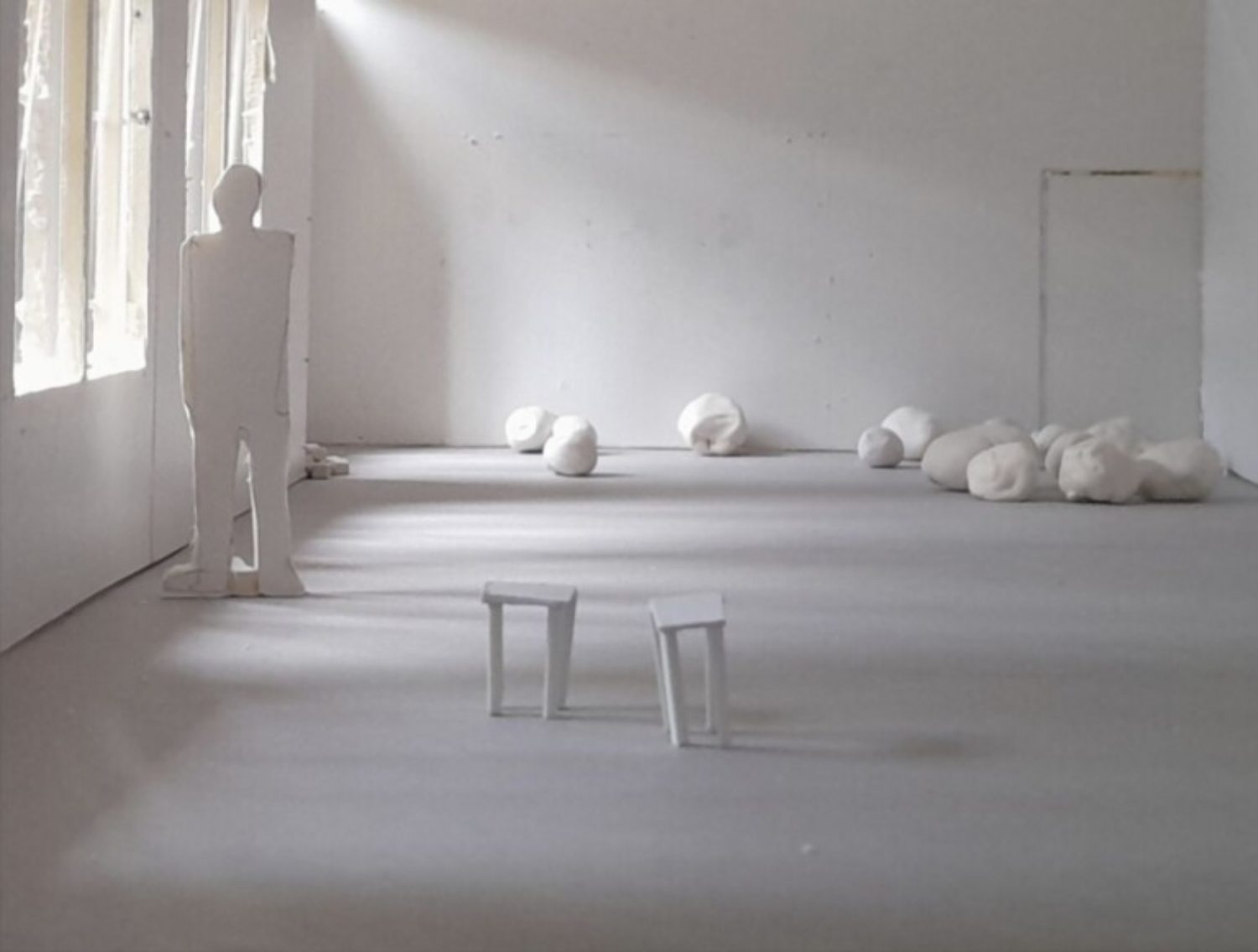
Lucia Bru in EICAS, Deventer
News content
In The Universe Appears to be Geometry Bru investigates geometry as the 'invisible power of the universe'. In ancient times, Pythagoras believed that reality was based on mathematical ratios and that numbers were the key to understanding the cosmos. In our time, physicist Max Tegmark even speaks of a universe that not only can be described mathematically, but is in essence a mathematical structure.
In many non-Western traditions, geometry is much more than a rational language. It forms a symbolic bridge between the material and the cosmic. It is used not only for temple architecture or art objects, but also in rituals of contemplation and stillness. As an image of the infinite and as a signpost to enlightenment. Certain shapes resonate with concepts such as unity, harmony, and the eternal.
For Lucia Bru, too, geometry is not a rigid grid of rules but a tangible force—a fluid order that attempts to make the structure of the universe and the invisible forces within it tangible.
Bru creates subtle sculptural installations in which material and form speak their own language. Using porcelain, paper, glass, and other fragile media, she explores how something seemingly fragile can still hold its own, how the soft imitates the hard, how the absent becomes tangible. Her installations form landscapes of light and shadow, in which presence and emptiness dance with each other.
Her work is being shown in the Netherlands for the first time. For Museum EICAS, Lucia Bru has made a selection that not only enters into dialogue with the work of Paul Van Hoeydonck, but also adds a new dimension—one that opens up and enriches the perception of space, material, and meaning.
For more information see the website: EICAS - Lucia Bru or the following article in De Volkskrant: Bru maakt van oud klaslokaal een onvolmaakt, breekbaar, porseleinen maanlandschap | de Volkskrant.