Works
Sopheap Pich, Works
From →
Wijnegem
Opening in presence of the artist.
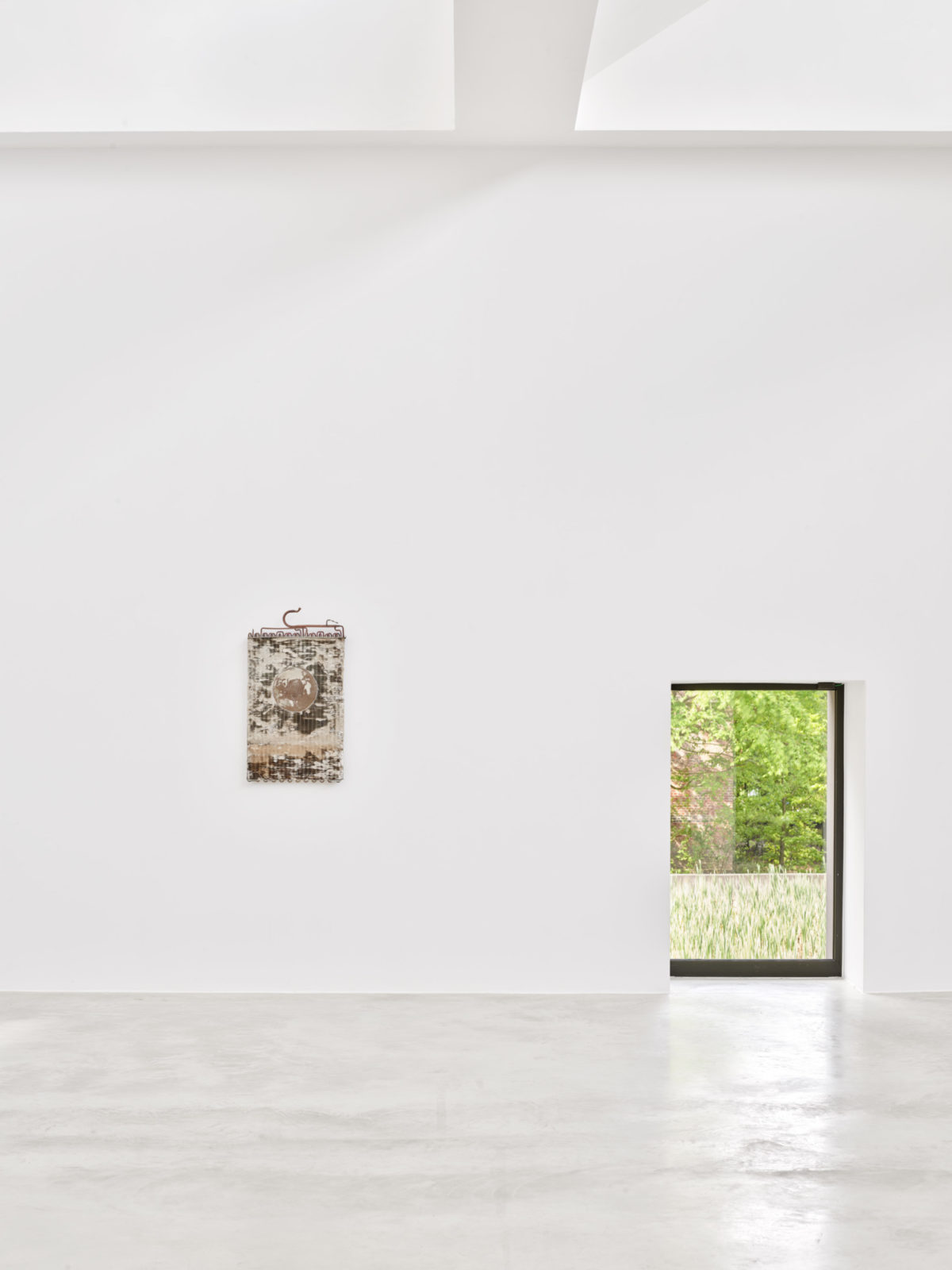
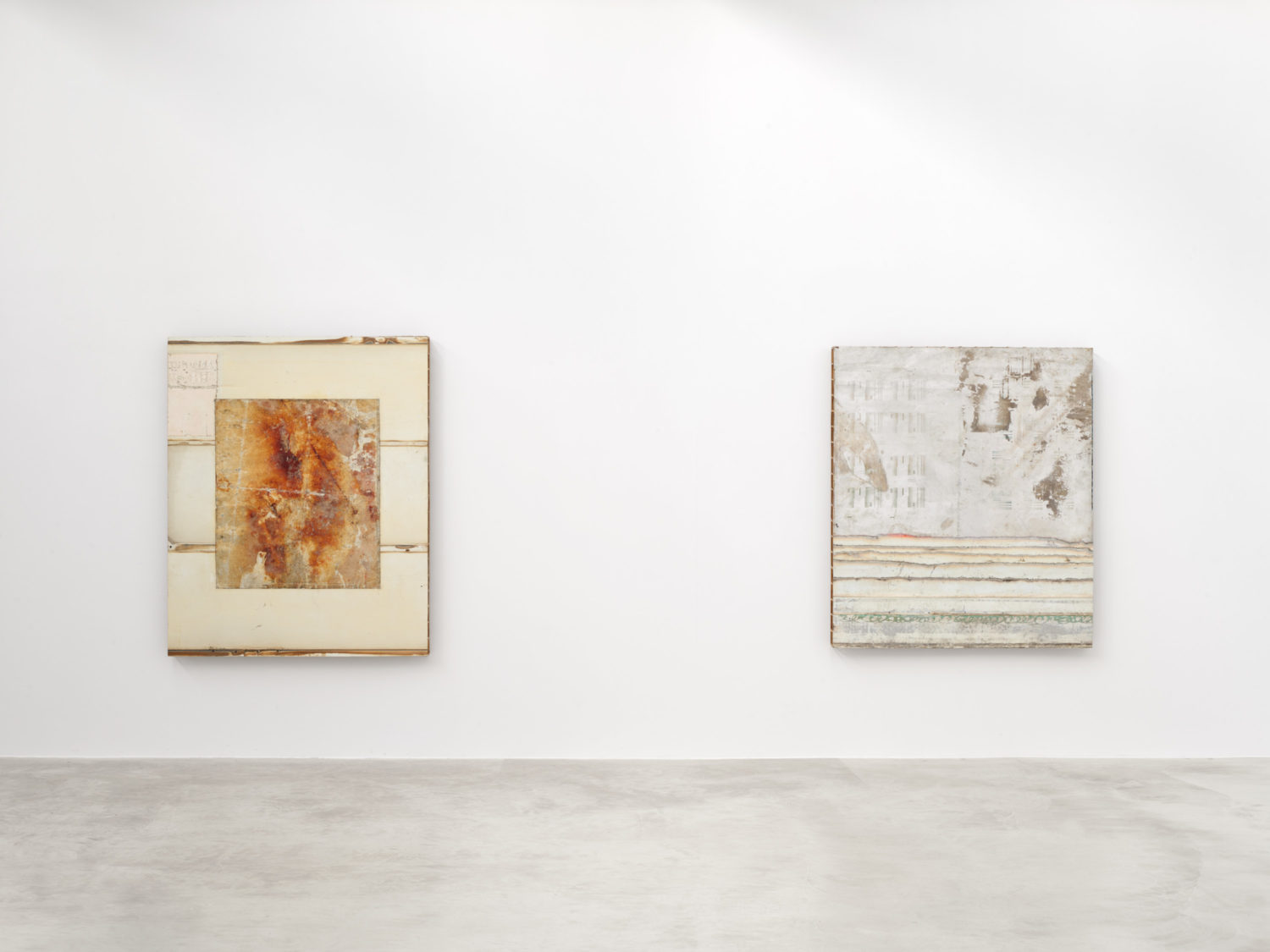
Pictures of the exhibition
Sopheap Pich, Works
From →
Wijnegem
Opening in presence of the artist.
Story of the exhibition
Axel Vervoordt Gallery is pleased to present the first solo exhibition in Belgium by Sopheap Pich (b. 1971, Battambang, Cambodia). The exhibition brings together a new body of work that continues Pich’s engagement with material, process, and the relationship between form and experience.
Pich is widely recognised for sculptures and wall-based works made from locally sourced bamboo and rattan, as well as works constructed from hand-forged copper and recycled aluminium. Rather than imposing form onto matter, Pich allows structures to emerge through repetition, tension, and accumulation. A latent grid informs both his woven and constructed works. “I work with materials that carry life within them,” he has noted. “They already have a history. My role is to listen and respond.”
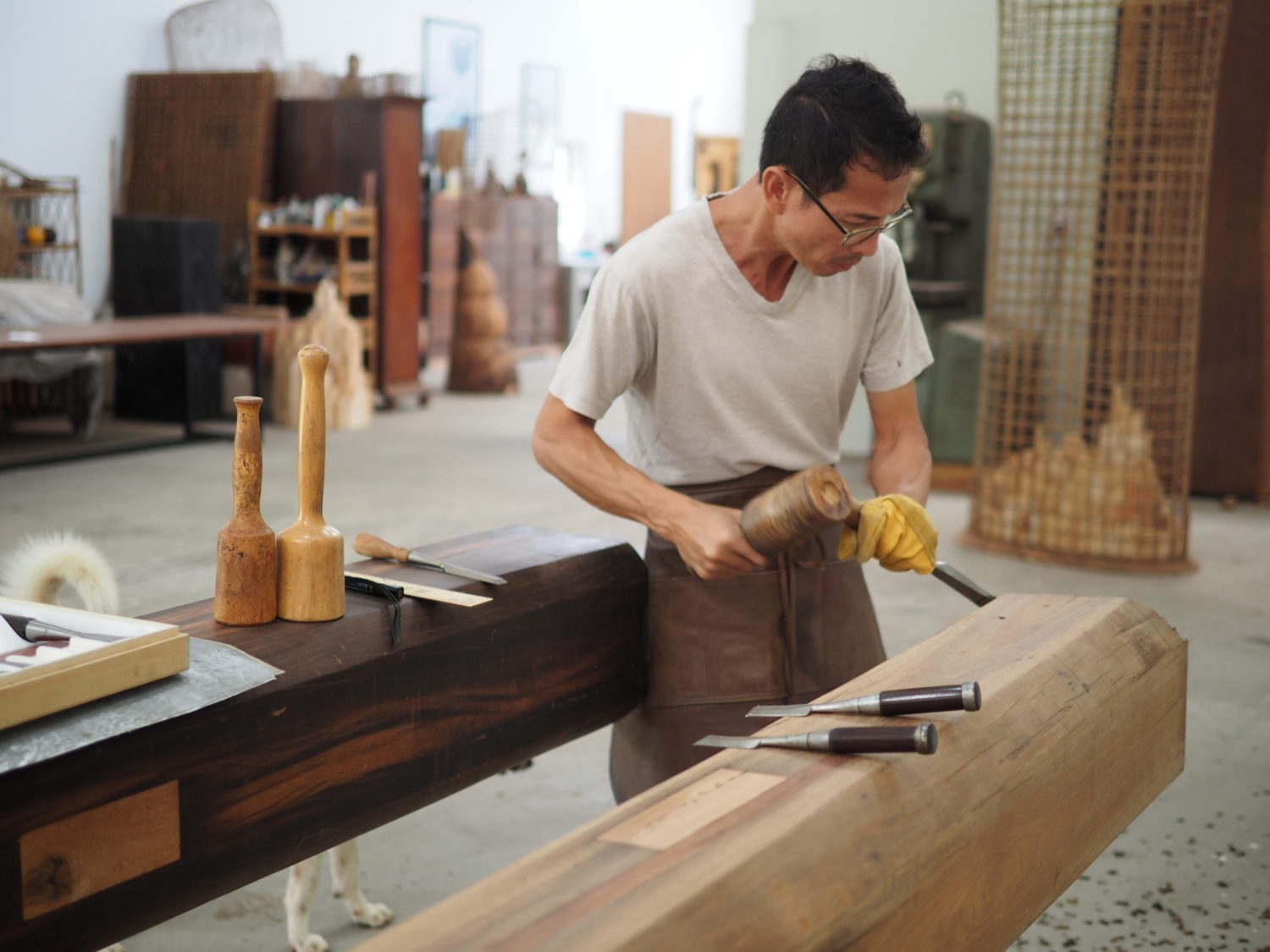
This attention to process is closely tied to the way memory and history operate within his practice. While Pich resists fixed narrative, his work remains shaped by personal and collective experience. Pich left Cambodia with his family in 1979, the year of the fall of the Khmer Rouge and returned in 2002 after studying in Chicago. This complex relationship to history is embedded in the act of making—through repetition, labour, and transformation. Produced in collaboration with his long-standing studio team in Phnom Penh, the works reflect shared knowledge and cumulative skill.
This approach unfolds through a formal language that resonates with the principles of Khmer ornamentation, or kbach. Rooted in centuries-old Cambodian visual culture, kbach provides a system of growth, proportion, and transformation, in which patterns evolve through repetition and variation rather than fixed symbols. While Pich does not directly reference ornament, his work operates through a comparable logic: forms emerge from basic elements, expand rhythmically, and develop through continuous extension and variation.
Within this framework, materials such as bamboo and metal take on both structural and cultural significance. Bamboo, a recurring element throughout his practice, functions as a foundational form in Cambodian culture and as a widely recognised symbol of growth and adaptability. Recycled aluminium introduces a different register: a material that carries traces of prior use—from cooking vessels and domestic tools to roof panels and automotive parts—while remaining responsive to process and touch.
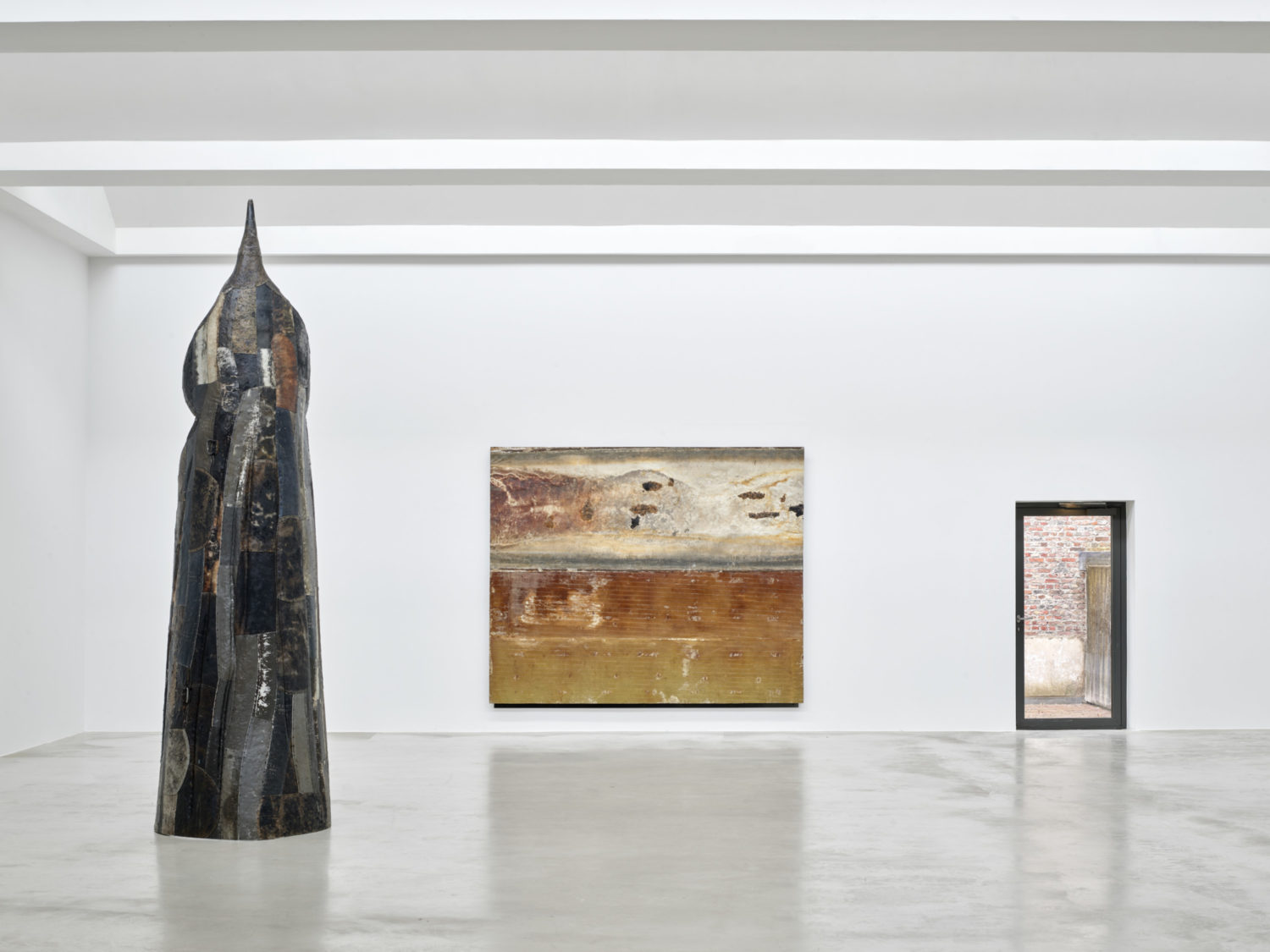
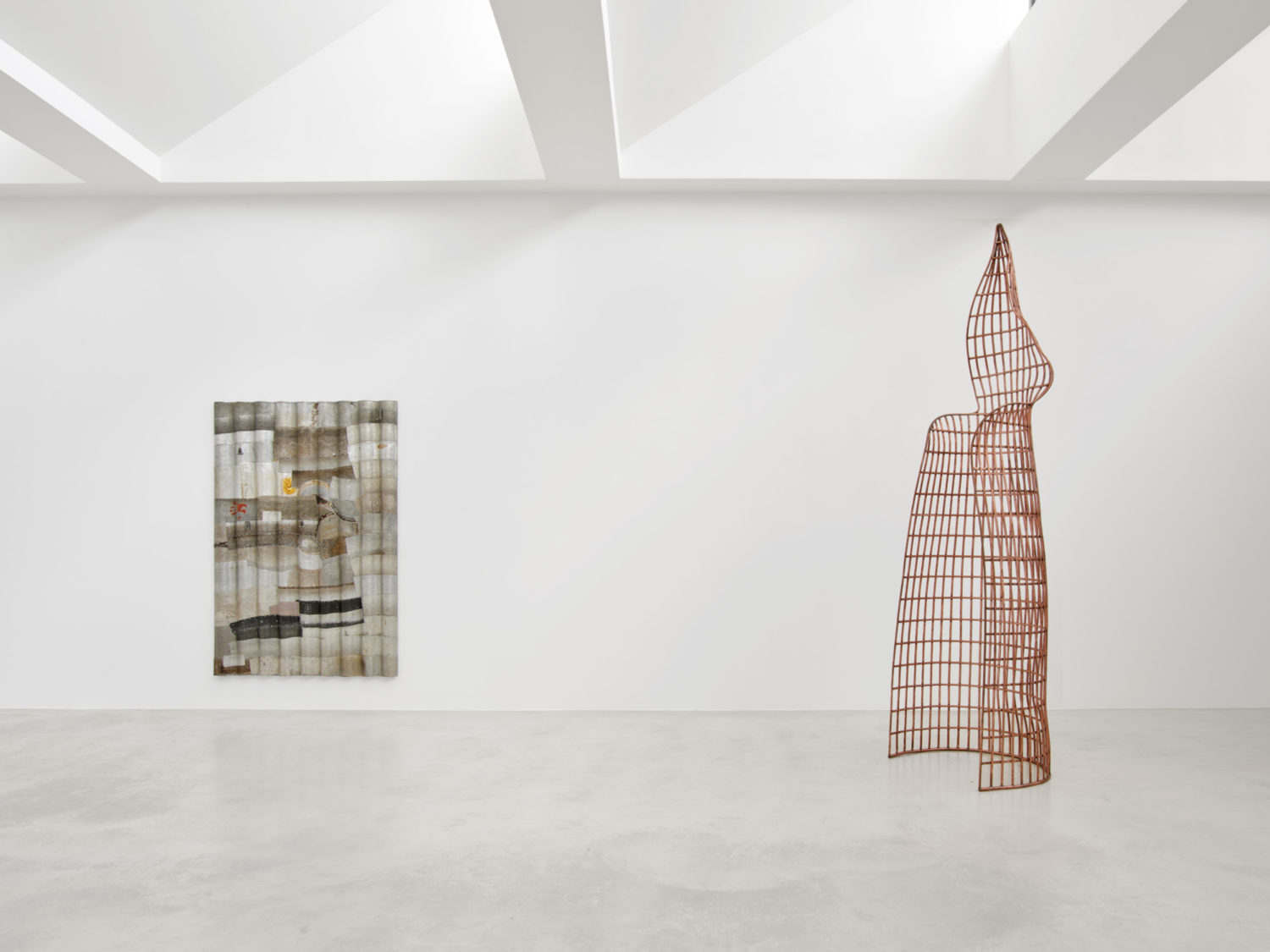
These concerns become spatially tangible in the exhibition. Upon entering, two large-scale Stalk sculptures anchor the space. One is constructed from recycled aluminium with a charcoal-blackened surface, its dense form contrasting with the open, grid-like structure of the other, made of polished hand-forged copper. The copper grid echoes the rhythm and flexibility of young woven bamboo and rattan, demonstrating how a rigid material can adopt the logic of lighter, organic structures. Visitors are invited to enter these works, experiencing them as protective yet permeable environments.
Beyond these sculptural forms, a series of wall-based works extends this vocabulary into more atmospheric and temporal registers. Works such as Aerial, The Wind and the Leaves, A Cold Winter, and The Night Air articulate movement, light, and the passage of time, allowing surface and structure to register processes of layering and change.
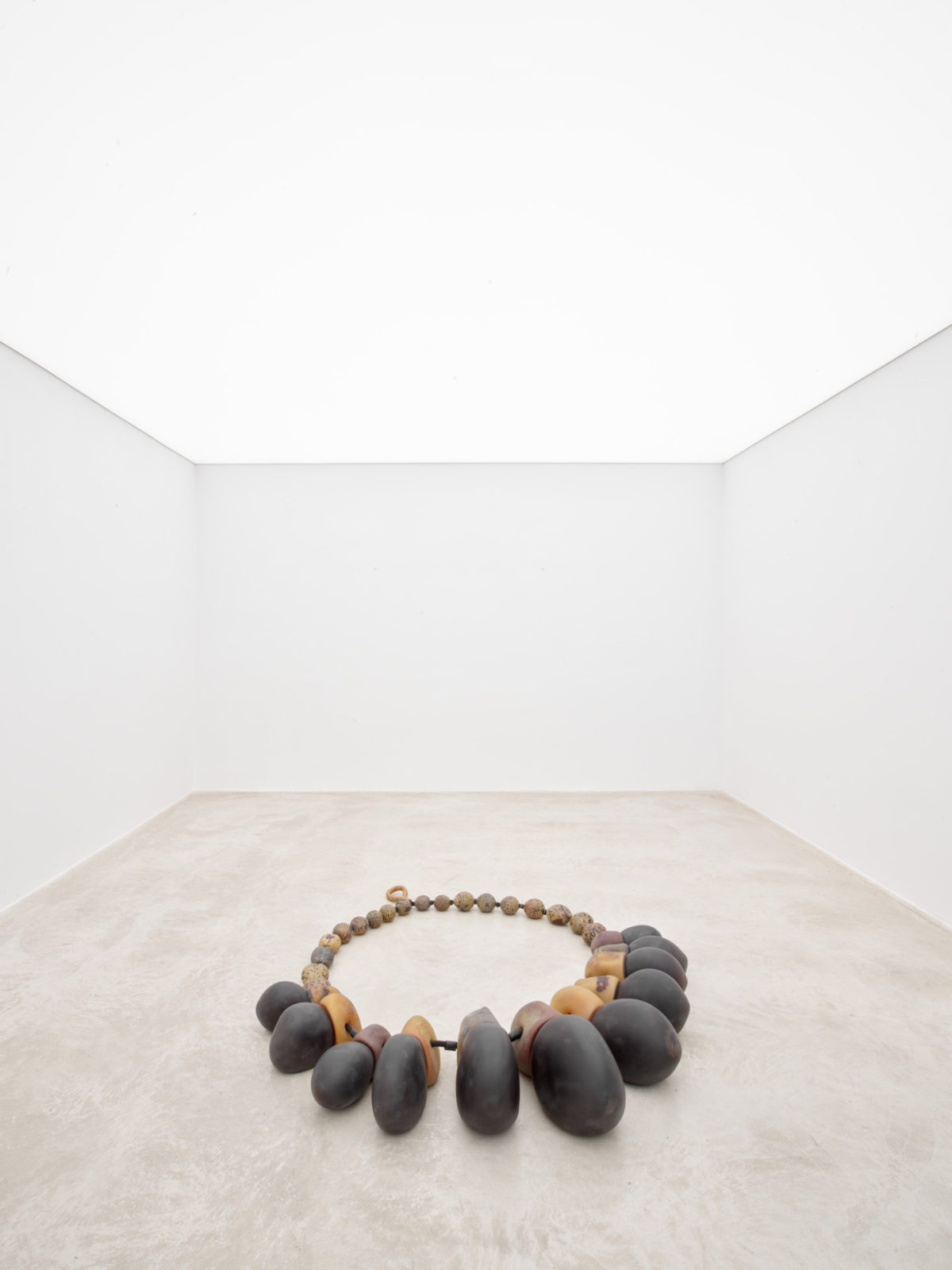
In a more intimate, adjacent space, Amulet (Hevea Afzelia) No. 1 introduces a different scale and register. Drawing on the form of a traditional protective object, Pich transforms the amulet into a monumental presence using hand-blown glass and bone elements. The work takes as its point of departure the magnified forms of Beng and rubber tree seeds. Both species carry distinct cultural and historical associations within Southeast Asia: the Beng tree (Afzelia xylocarpa), an endangered hardwood long used in architecture and craftsmanship, and the rubber tree (Hevea brasiliensis), whose cultivation is tied to histories of extraction and to ecological disruption.
Amulet takes the form of a folk charm, traditionally symbolizing good luck. In combining these two contrasting natural elements, the work reflects on the coexistence of divergent forces - one representing wild nature, the other shaped by human intervention - offering a meditation on balance, adaptation and resilience. Organic, seed-like and internal structures recur here as points of departure, bridging the body and architecture, and extending from an object of personal significance into a spatial structure.
Across the exhibition, Pich’s practice moves between scale and intimacy, object and environment. While resisting fixed narrative, the works articulate a precise relationship to material, form, and space, foregrounding processes of resilience, regeneration and continuity.