Source
Kim Lim, Source
From →
Hong Kong
Pictures of the exhibition
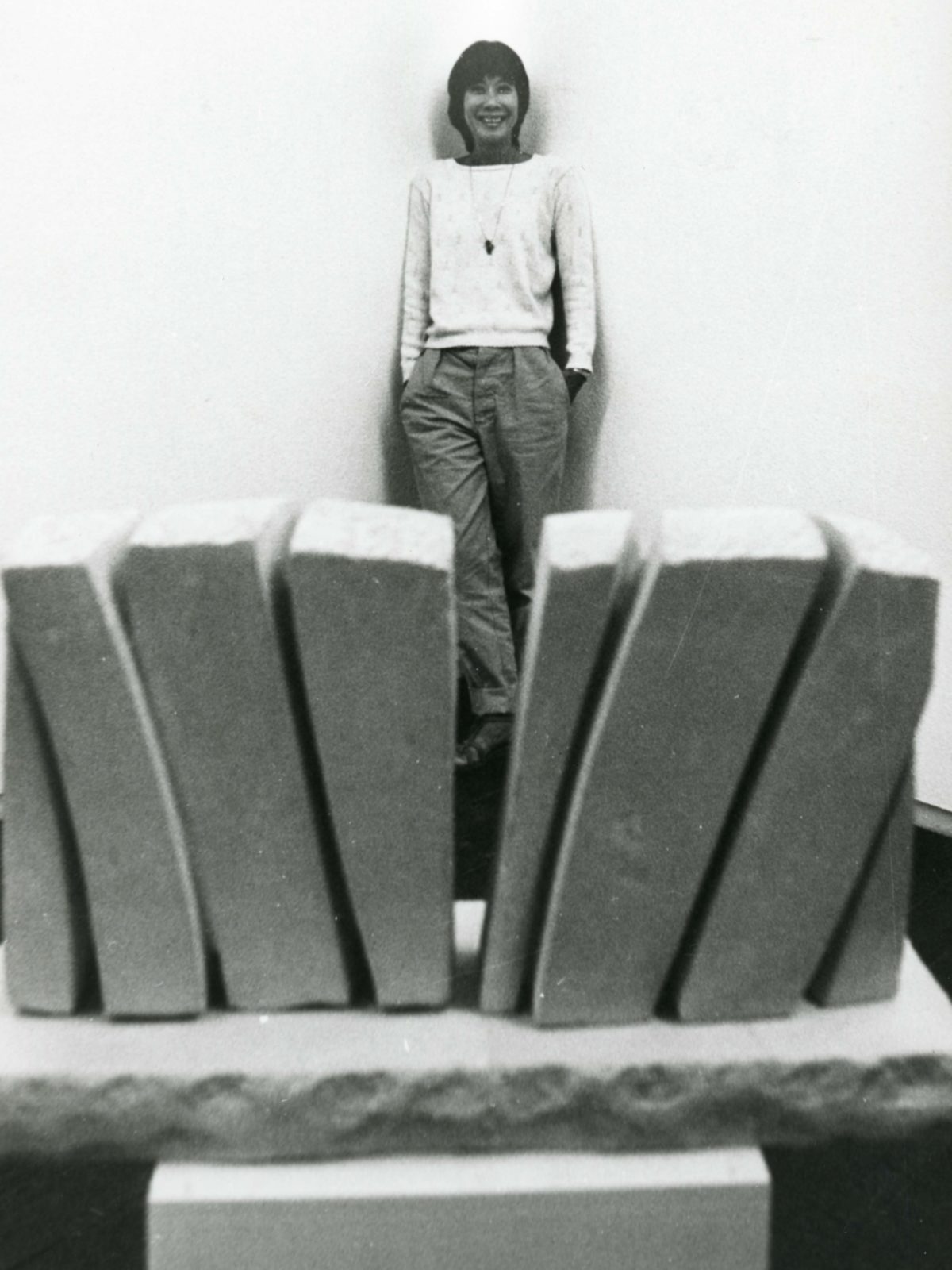
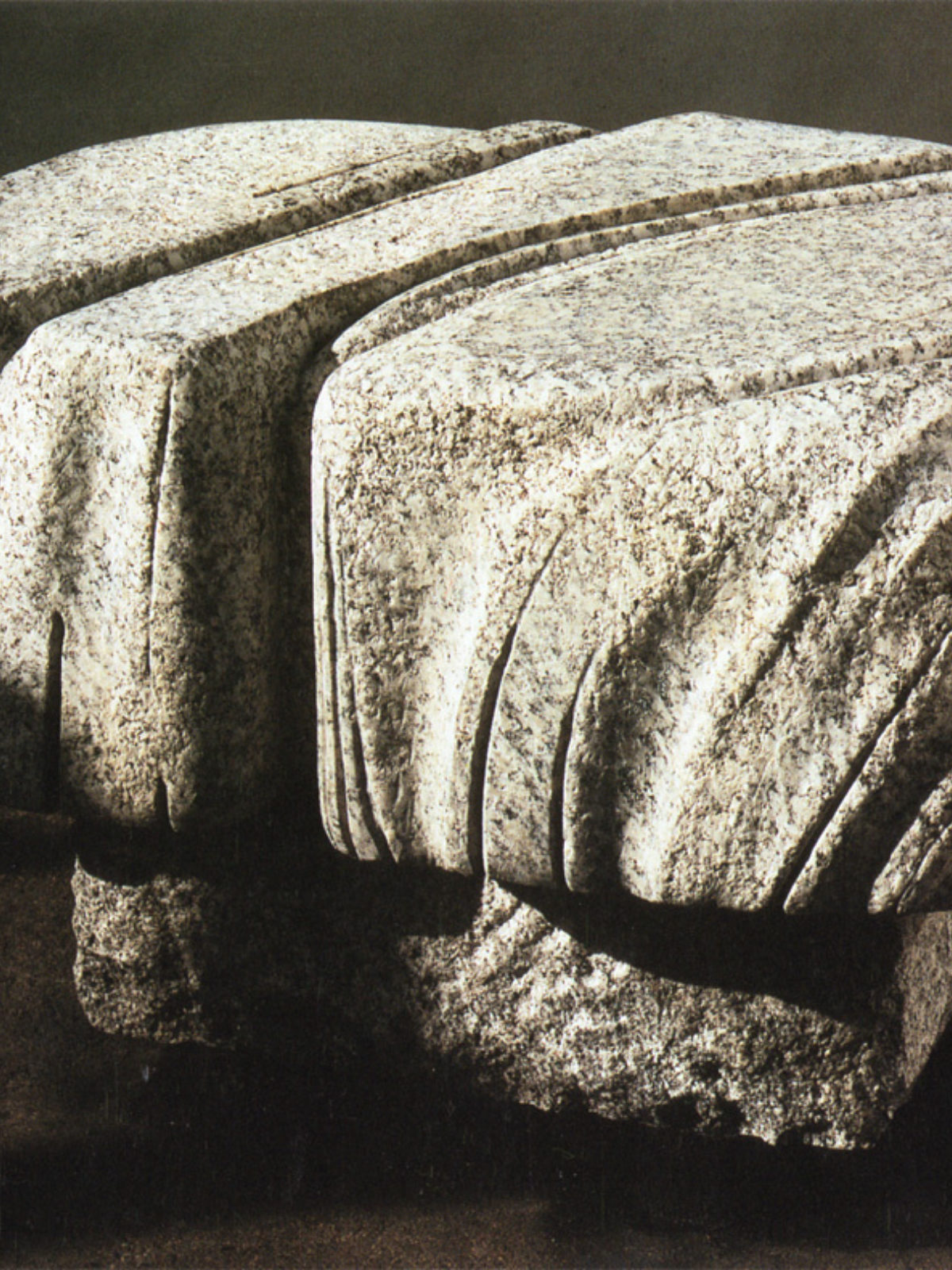
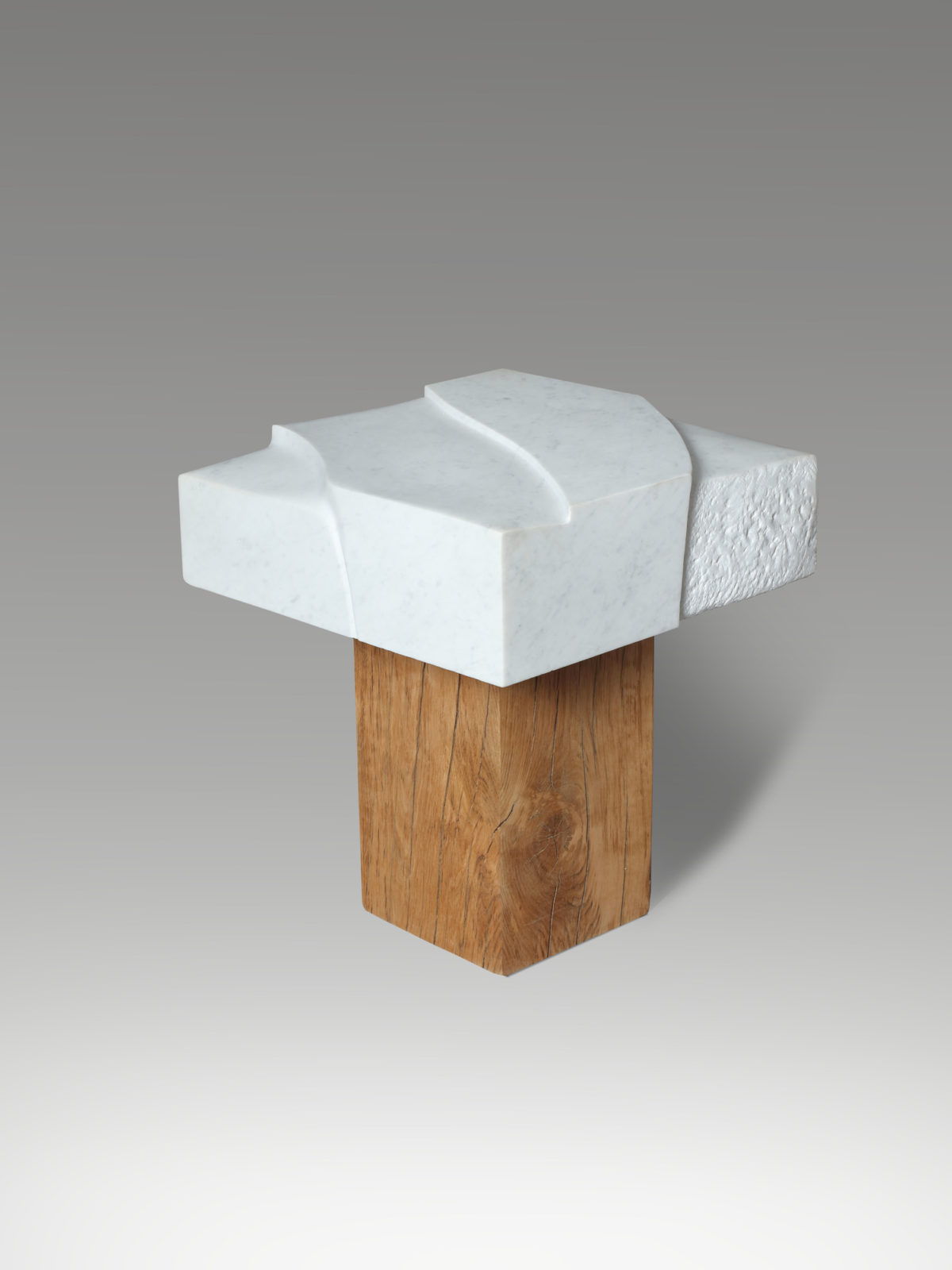
Kim Lim, Source
From →
Hong Kong
Story of the exhibition
Kim Lim: Source
Curated by Bianca Chu
Axel Vervoordt Gallery is delighted to present Source, a solo exhibition of artworks by late Singaporean-British artist Kim Lim. Source brings together sculptures, prints and photographs by Kim Lim in an exhibition exploring rhythm, transformation and the vital energies held within matter. Taking its title from Lim’s 1988 sculpture, the exhibition begins with the idea of the source not simply as a fixed point of origin, but as a generative condition: a place from which forms emerge, change and return. It also refers to source material—the observations, things, experiences and documentation that inspired Lim’s artistic journey and process.
Lim was highly attuned to her chosen materials: to their particular densities, textures and internal rhythms. Writing about Source, she described how its carved lines “widen and spread, deepen and sometimes disappear,” while the granite itself possessed “a kind of compact energy.” Such observations reveal an artist who did not treat stone or wood as inert substances upon which form was imposed.
After 1979, when carving stone became a central focus of her practice, the dialogue between the movement of Lim’s hand and the latent capacities of the material became even more visible. Through prolonged observation and considered intervention, she responded to the weight, resistance, grain and energetic properties of each stone, allowing something of its inner life to be gradually revealed.
Organised around ideas of breath, movement and attention, the exhibition considers Lim’s work in relation to ancient Chinese cosmological and philosophical understandings of the natural world as a continuous process of transformation.
Within Daoist thought, the Dao [Way] is described as the unnameable and inexhaustible source from which the myriad things emerge. From this primordial condition arises wuxing—wood, fire, earth, metal and water—commonly translated as the “five elements.” Yet these are not static substances; rather, they describe interdependent movements through which matter and energy continually generate, transform and return.
The related concept of qi—variously understood as breath, vital energy or life force—offers one way of approaching the movement held within Lim’s apparently still forms. Grooves ripple across stone; surfaces alternately absorb and reflect light; solid volumes appear porous, fluid and responsive to the surrounding space. In works such as Wind-Stone (1992) and Sea-Stone II (1996–97), the permanence of stone meets the movements of wind and water, evoking natural processes unfolding across deep time.
These qualities extend throughout Lim’s practice. Her prints translate rhythm into sinuous lines that move between the recognisable and the enigmatic, suggesting topographical maps, cells, whirlpools, labyrinths or unseen structures. Scale remains fluid too: a single line might evoke the course of a river, the contour of a mountain or the connective tissue of a larger universe. Rather than referring to one specific image, Lim sought to create “metaphors that could act as triggers,” opening her work towards experiences beyond the object itself.
Kim Lim: Source invites visitors to encounter the artist’s practice as a field of interrelated rhythms: between solidity and flow, presence and absence, nature and artifice, the atomic and the cosmic. Her works ask us to look slowly, to listen carefully and to contemplate the possibility that even the most enduring forms are never entirely still—or entirely what they seem. In doing so, we might consider the idea of source: not only as an origin, but as the tapestry of a life, woven from the observations, encounters, memories and experiences from which vital form continually emerges.
Running continuously throughout the exhibition space, Heavenly Stems (2026) is a new sonic work by experimental duo Bianca Chu and Flora Yin-Wong, specially commissioned by Axel Vervoordt Gallery.
---
The exhibition explores the concept of "source" as a generative, unfixed condition, framing Lim’s art practice in relation to ideas in ancient Chinese cosmology and art history such as wuxing (Five Elements) and qiyun-shendong (breath-resonance). Filling the gallery, the sound commission expands on these concepts sonically by weaving fragments of Lim’s own "voice" drawn from surviving writings in the artist’s archive. Its title refers to the ten Heavenly Stems in Chinese cosmology, formed through the interaction of the Five Elements or "movements" (Wood, Fire, Earth, Metal, Water) with the forces of yin and yang.