Human Traces
Group exhibition, Human Traces
From →
Wijnegem
Pictures of the exhibition
Group exhibition, Human Traces
From →
Wijnegem
Story of the exhibition
Human Traces
Archetype, Archive, and Transformation
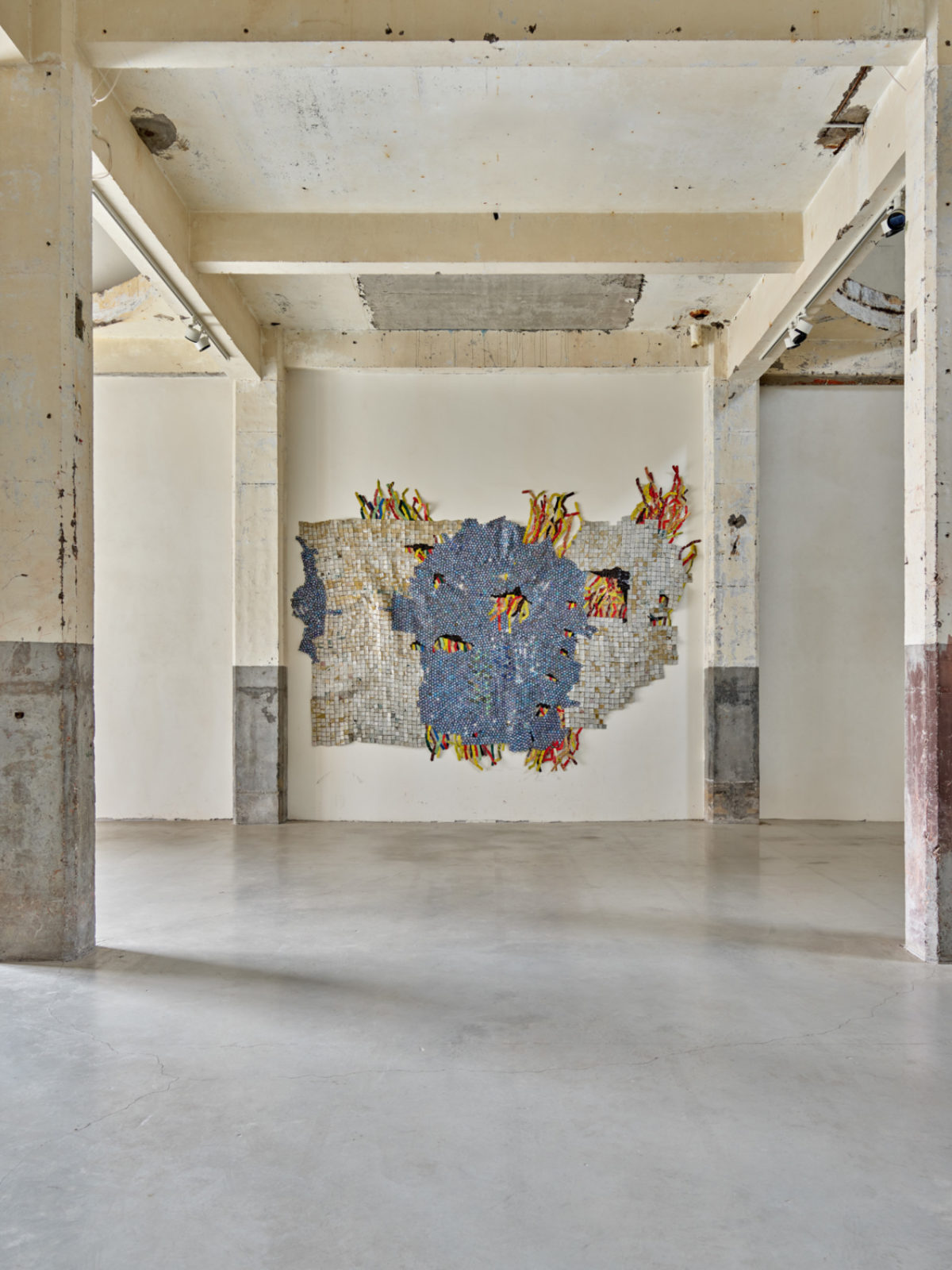
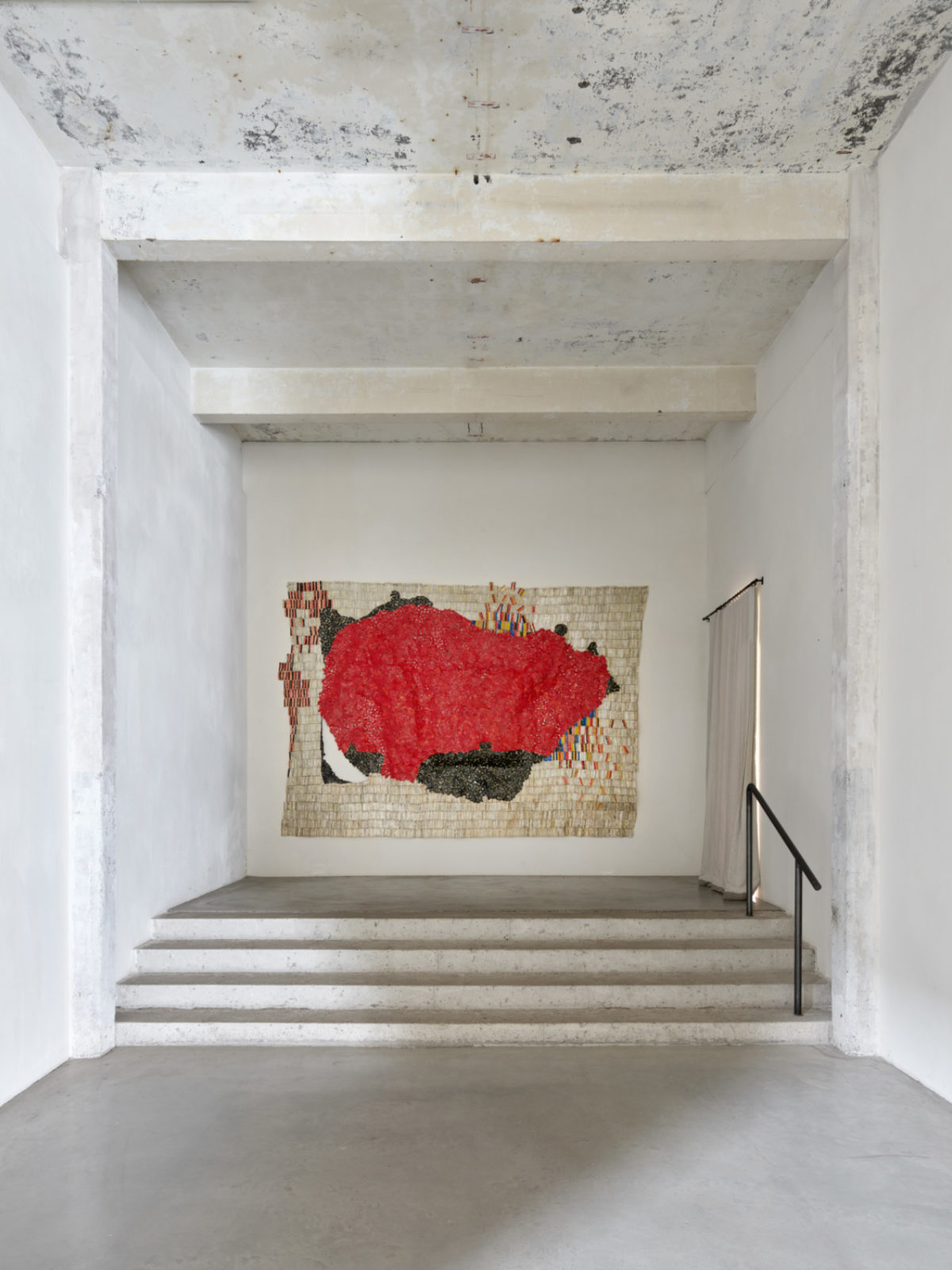
Axel Vervoordt Gallery is pleased to present a group show at the Escher Gallery, Kanaal juxtaposing work of El Anatsui and William Turnbull. Although coming from a different historical and cultural background, these artists share a similar conceptual point of view around archetype, memory, material transformation, and the human journey. Both strive towards a transformation from the ordinary to the sacred.
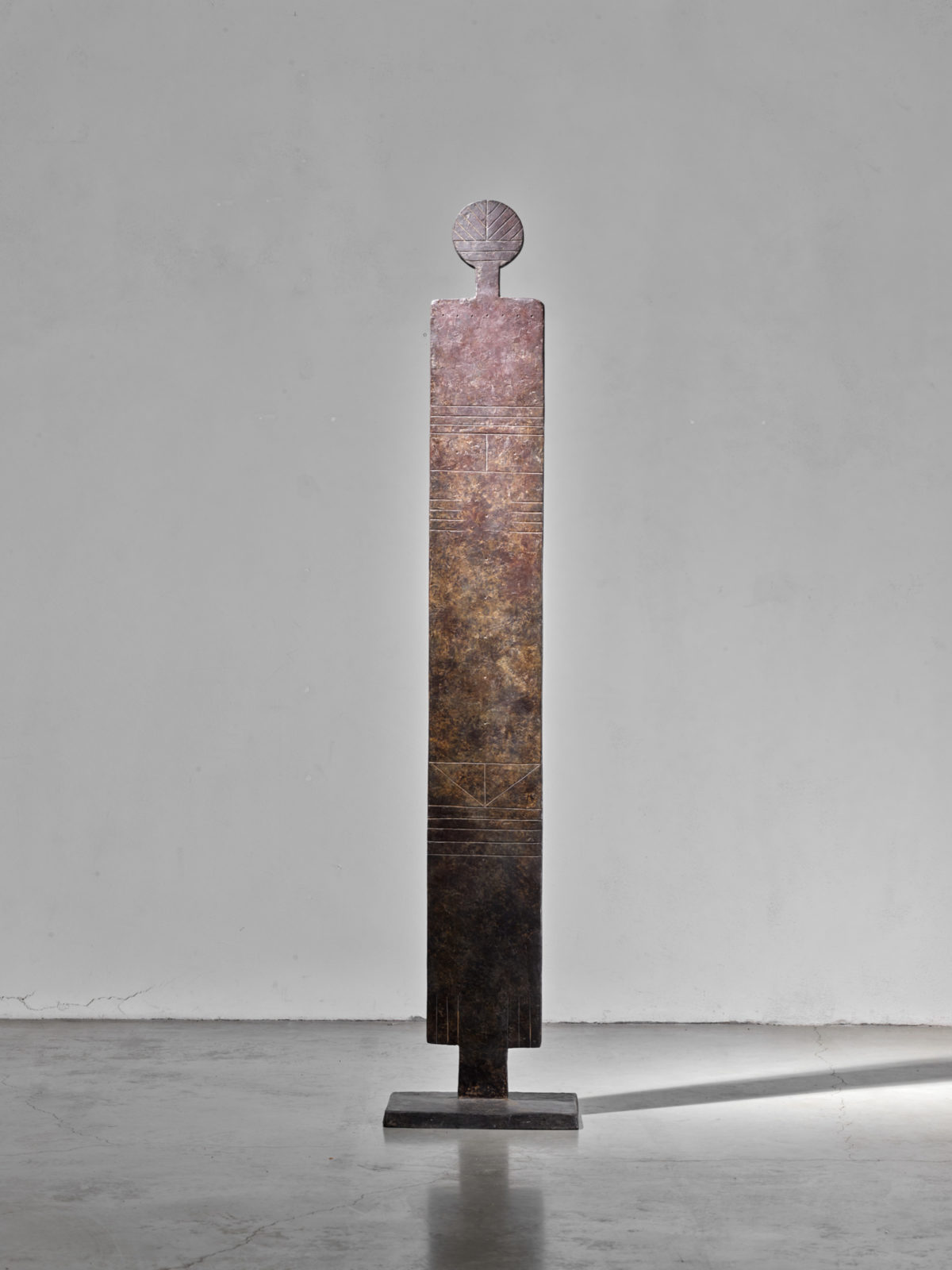
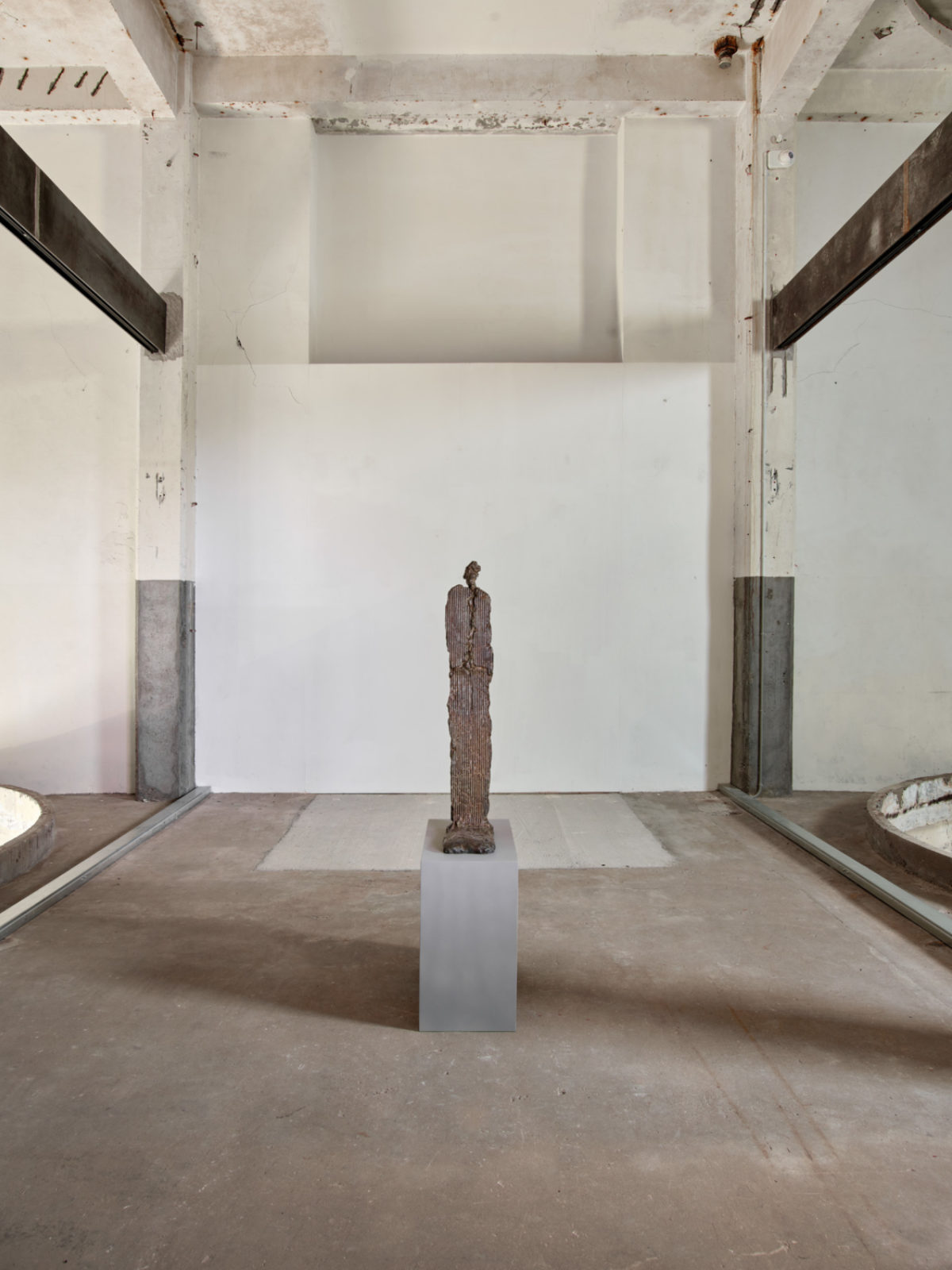
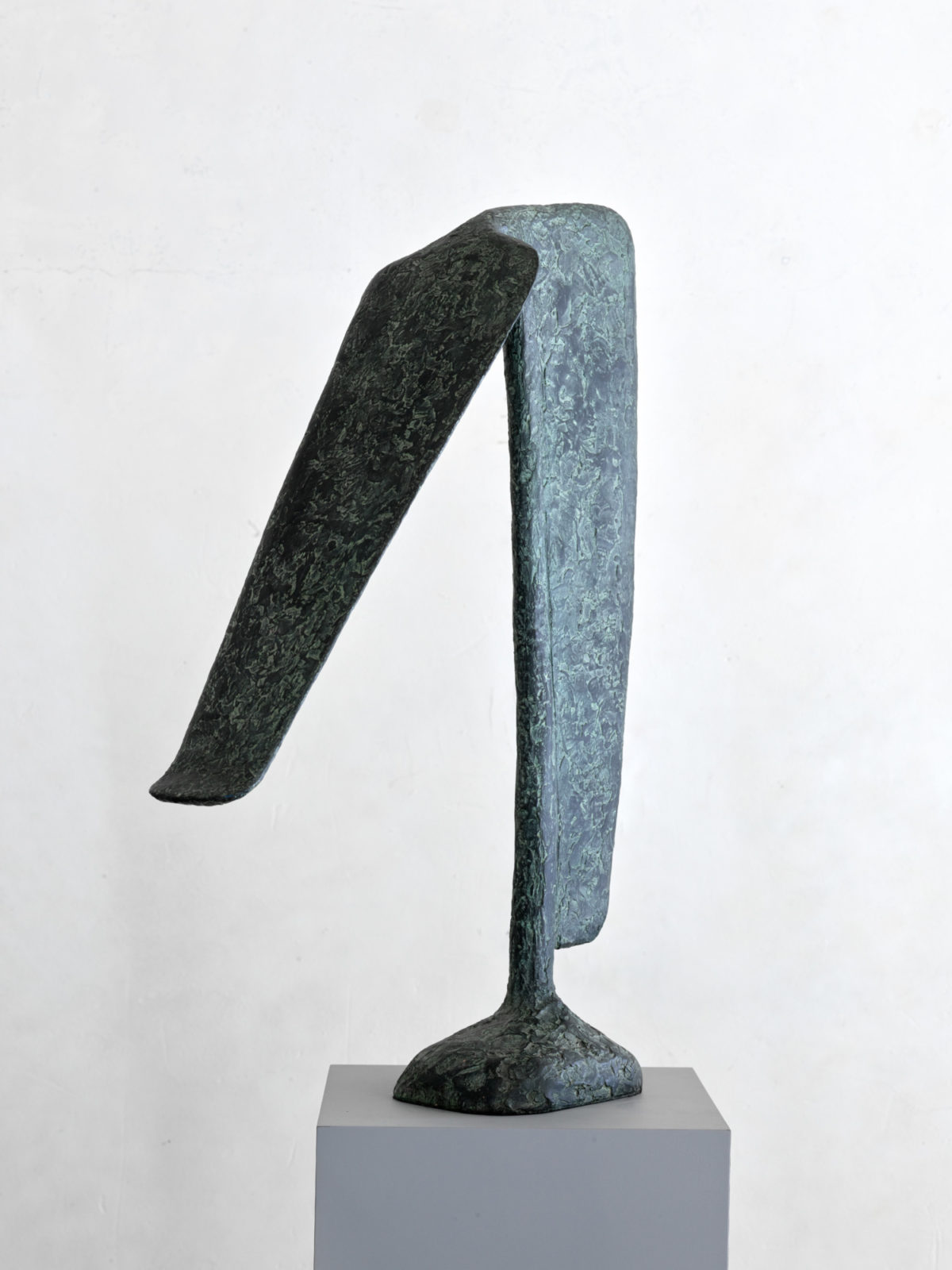
William Turnbull (1922, Dundee – 2012, London) worked between abstraction and archetype, creating sculptures that feel simultaneously ancient and modern. His sculptures strive toward archetypal forms, almost ritualistic. They often suggest timeless presences—horses, female figures, blades—reduced to their essence. Influenced by Asian art, Cycladic idols, and early ritual objects, he sought to evoke universal human symbols rather than naturalistic representation. In his human figures, e.g. Figure, 1955, the body is only partially defined, somewhat blocky, with a roughened surface. Like Giacometti, with whom Turnbull was befriended, he shared the same idea of the human figure as a symbol of perseverance, stripped of narrative and individuality. Both artists were responding to the existential atmosphere after the World War II. In his Female Figure, 1991, the lack of details universalise the figure; this tall abstract column becomes a timeless symbol of humanity, not an individual woman.
Turnbull’s sculpture of a compact, stylised horse from 2000 is also reduced to strong, simplified volumes. The sharp curved line evokes the inclined head of a horse; the form feels carved rather than modelled, with mass and presence taking precedence over detail. The sculpture recalls early Asian bronze horses and Scythian steppe art, which Turnbull admired.
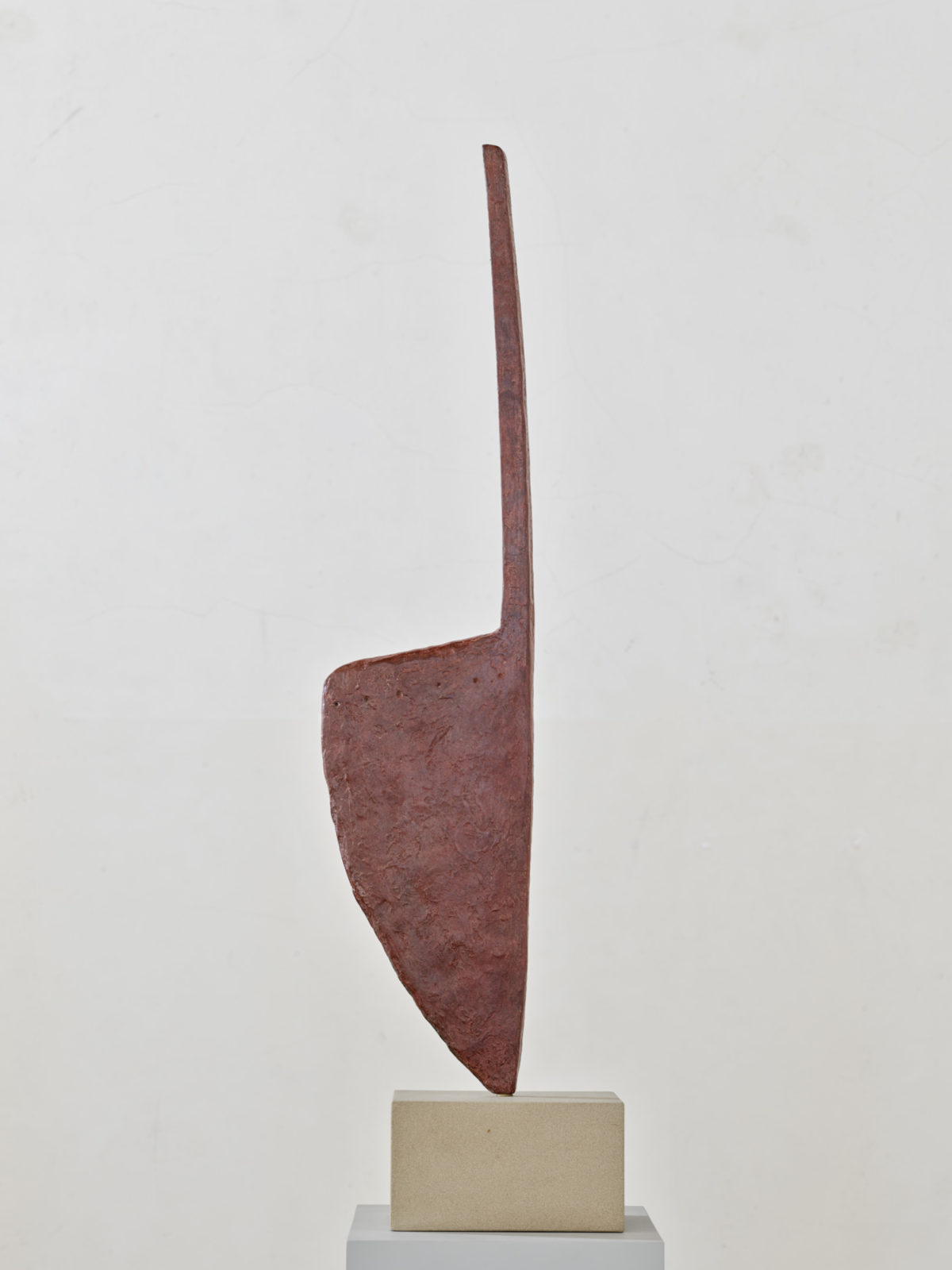
His Blade Venus, 1989 present extremely slender, flat, vertical forms resembling both a blade and a female figure. They read as “Venus” only through the large widening at the midsection of the sculpture, hinting at shoulders or hips. These pieces show Turnbull’s interest in reduction and refers to the universal language of the simplified female figure in Cycladic art.
One of the most influential artists of his generation, El Anatsui (b. 1944, Anyako, Ghana) is widely regarded for his tapestry-like sculptures made from recycled metal fragments. By crumpling, crushing, and stitching bottle caps into different compositions, large panels are pierced together to form massive abstract fields of colour, shape, and line. His bottle caps carry histories of consumption, colonial trade, migration of goods and cultures. Anatsui transforms the remnants of postcolonial economies into something luminous and alive: a powerful meditation on history, material, and transformation.
Although Turnbull and Anatsui emerge from different contexts and use different materials, they operate in the realm of universal, cross-cultural symbols. By presenting the simplest forms — a figure, a bundle, a cloth — they speak on behalf of humanity at large by using universal, timeless symbols.