Asteroid J-734
Jaffa Lam, Asteroid J-734
From →
Hong Kong
Pictures of the exhibition
Jaffa Lam, Asteroid J-734
From →
Hong Kong
Story of the exhibition
Axel Vervoordt Gallery is pleased to present 'Asteroid J-734', a solo exhibition by Jaffa Lam at its Hong Kong space. Marking Lam’s third solo presentation with the gallery —and her second in this location since 2022 —the exhibition extends her longstanding engagement with material, community, and storytelling. Bringing together new works across a diverse range of mediums —including ceramics shaped during her residency in Longquan, alongside umbrella fabric and metal pieces —Asteroid J - 734 forms an interconnected constellation of materials and forms that move fluidly between the monumental and the intimate.
Through this body of work, Lam invites viewers into a world seen through her eyes. Artworks scattered throughout the exhibition echo stories from her personal history and the discoveries made during her time away from Hong Kong. At once deeply personal and profoundly connected to the environments and communities that sustain her, 'Asteroid J-734' becomes a contemplative journey —an act of venturing beyond home to rediscover the self and to find meaning within uncertainty.
The title, Asteroid J - 734 , draws upon French author Antoine de Saint- Exupéry’s Le Petit Prince , referencing the lost prince’s home planet of Asteroid B-612. The story follows a fallen pilot encountering a prince venturing through planets in search of meaning, belonging, friendship and love. Saint - Exupéry’s writing resonated with Lam particularly deeply in the last few years as she navigated changes in her life brought about by personal loss. Lam felt a growing sense of disillusionment with the modern world as it is, longing for the simple joys of childhood in her hometown of Fuding, leading her on a journey to rediscover her own identity.
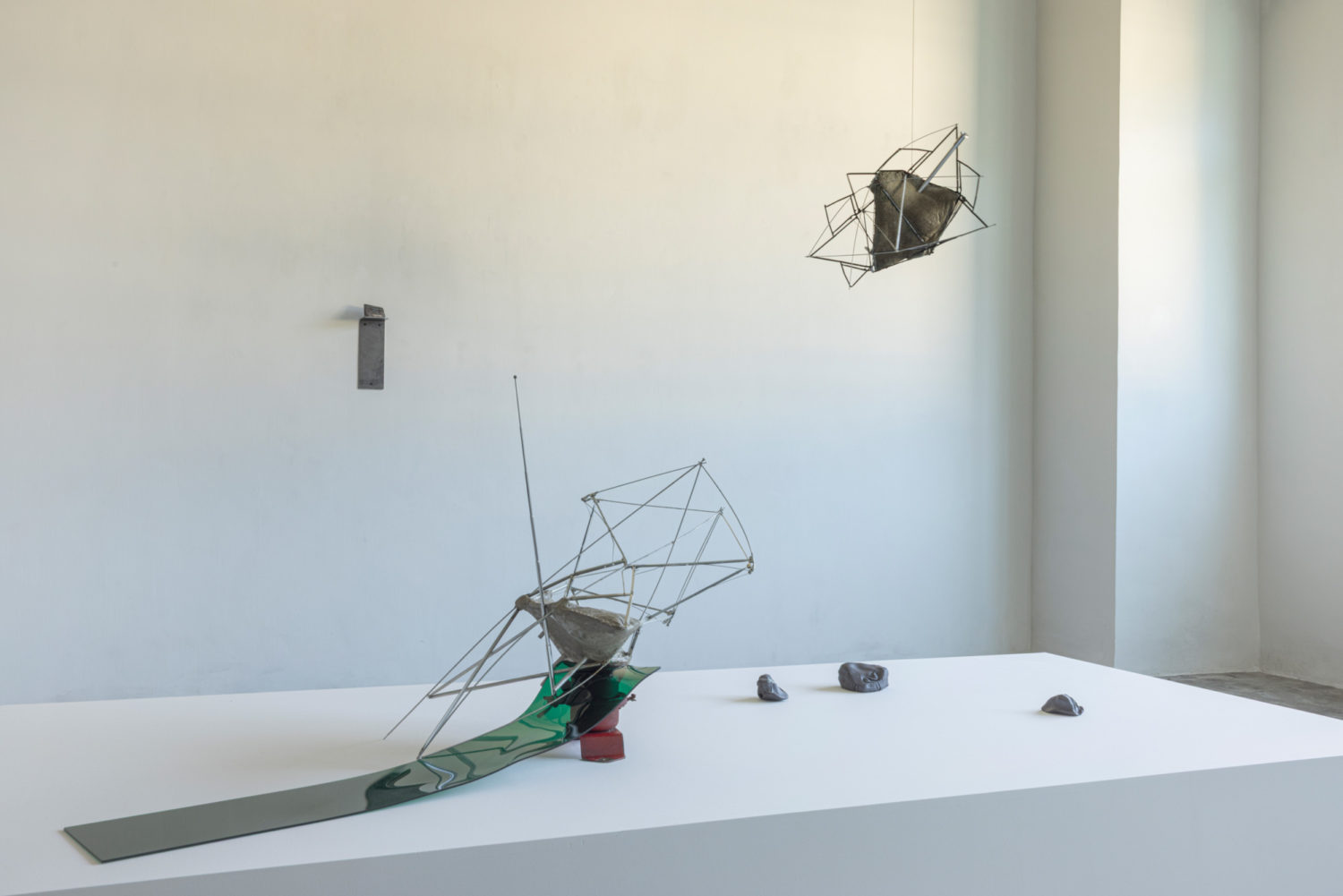
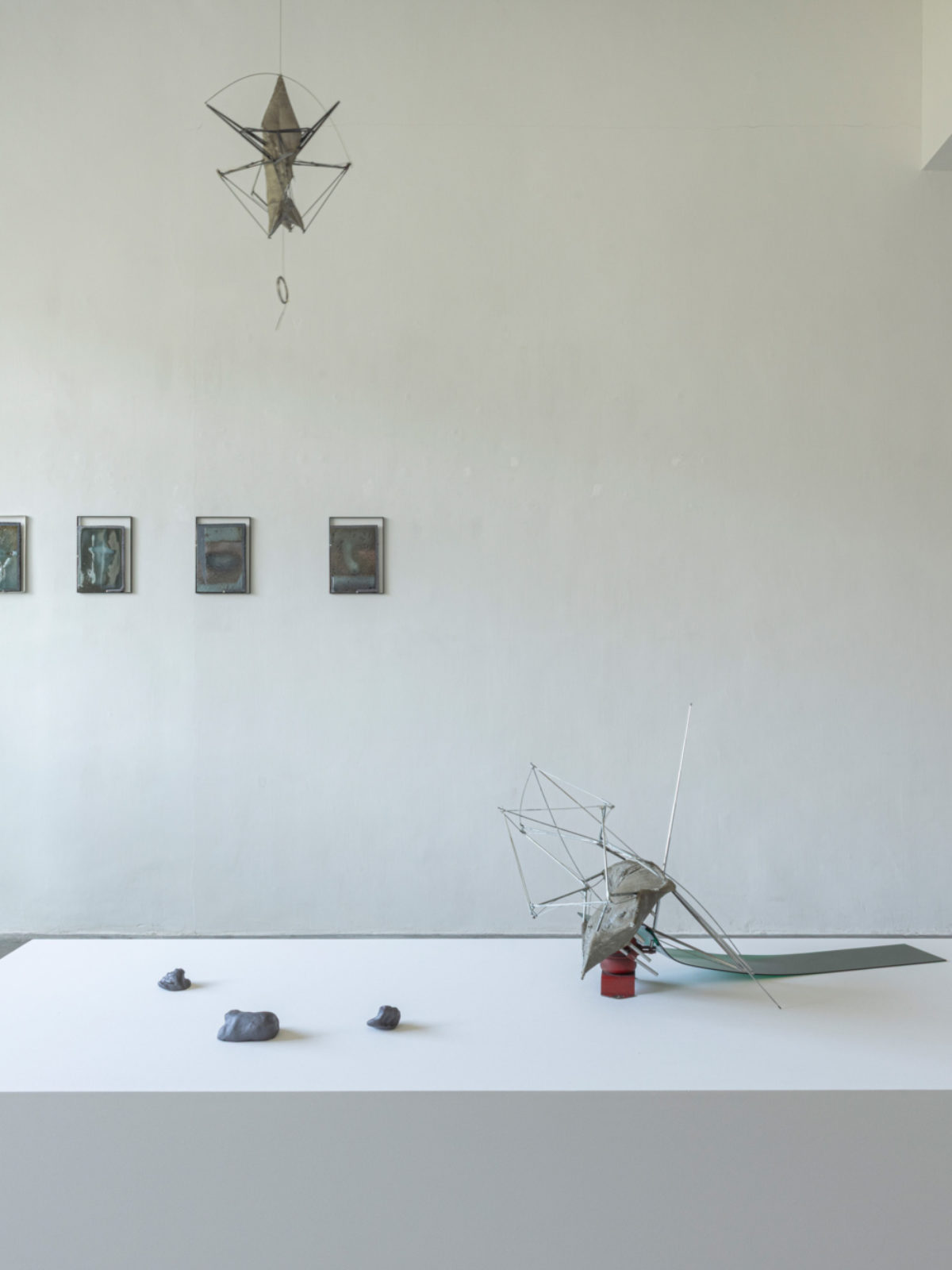
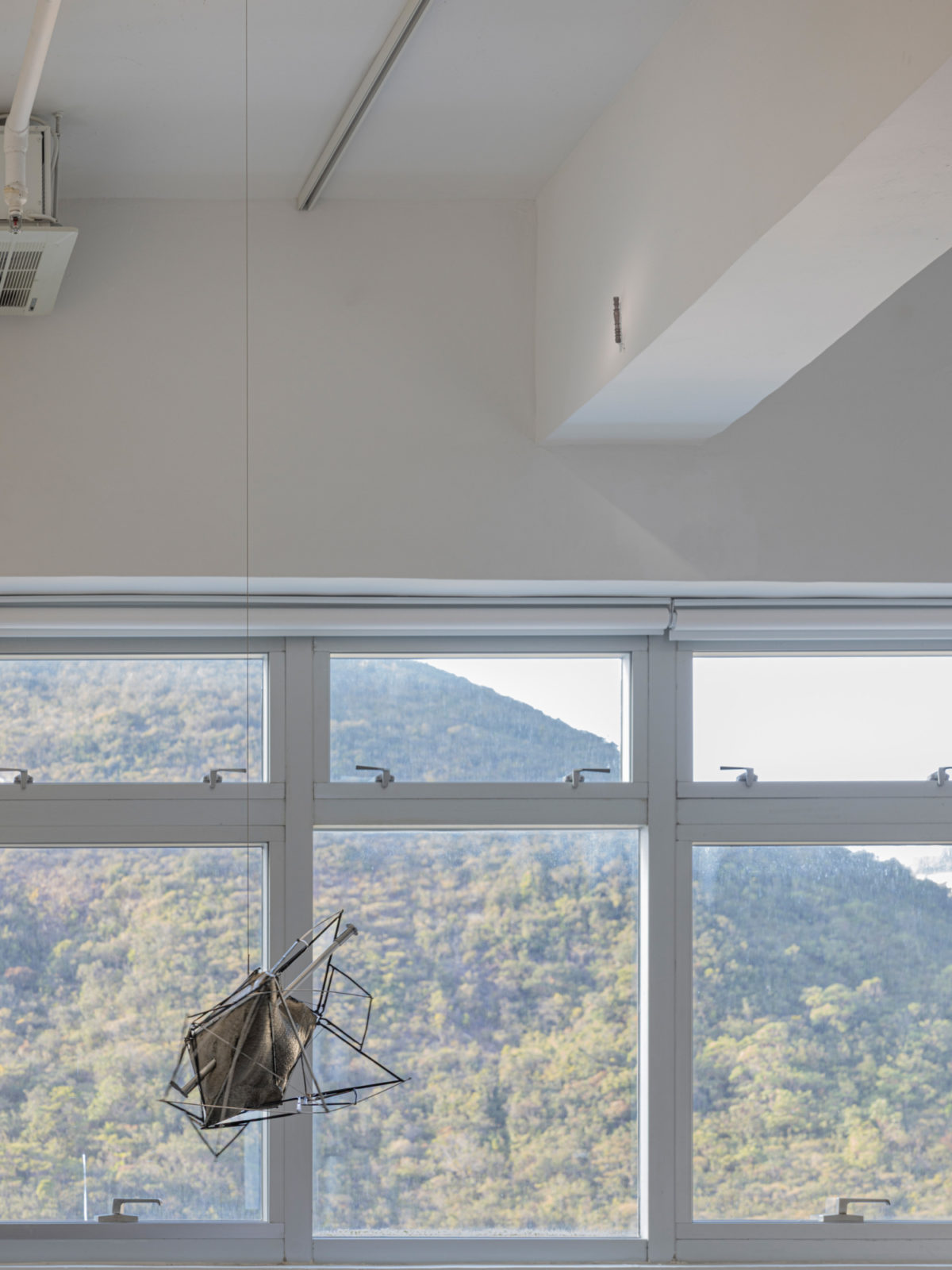
Asteroid J-734 (re)introduces Jaffa Lam’s practice as it has developed in the past few years – each work showcasing the materials and ideas she has been experimenting with in this time. The exhibition begins with a sense of possibility and exploration: a series of stars, created from unexpected assemblages of materials, confronts the viewer and invites curiosity before discovery. The motif recalls a passage from Le Petit Prince:
“All men have the stars… but they are not the same things for different people. For some, who are travelers, the stars are guides. For others, they are no more than little lights in the sky. For others, who are scholars, they are problems. For my businessman, they were wealth. But all these stars are silent. You — you alone — will have the stars as no one else has them…”
To Lam, the stars become metaphors for the ongoing search for self — a journey that is at once individual and shared. The act of looking upward is profoundly human; it binds us to one another and to those who gazed before us. Yet within this common experience, each person encounters their own constellation of questions and answers. These works are sites of exploration, a declaration of the intention with which the artist set out on her journey. Each piece brings together new materials and forms, at times contradictory and disjointed, embodying Lam’s inquisitive and playful approach to discovery.
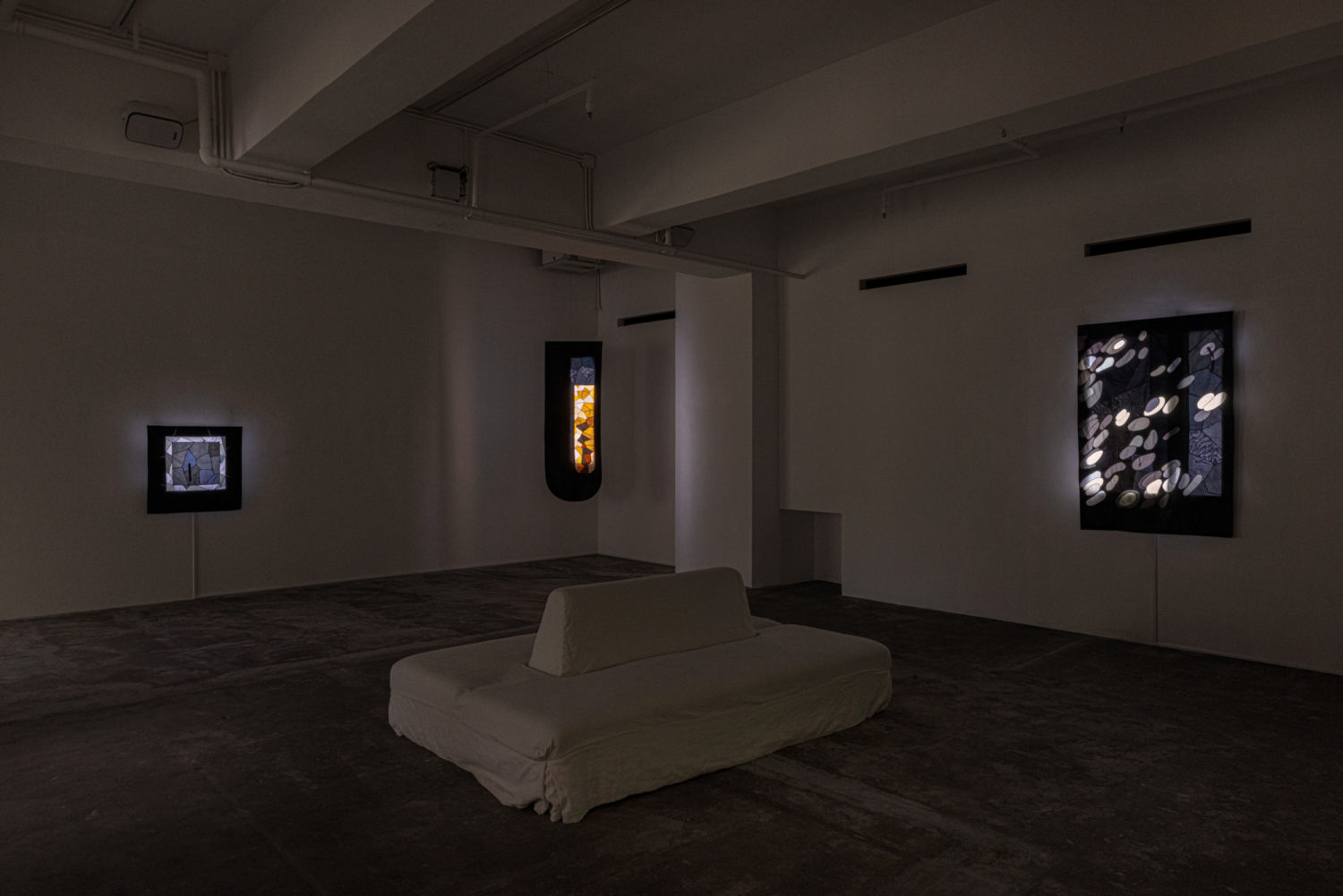
From the stars, Jaffa Lam returns to Hong Kong through her Window series — a body of fabric works made in collaboration with members of the Women’s Labour Association with whom she has worked for years. Each piece is an assemblage of found umbrella fabrics which capture the melancholy of the fleeting nature of beautiful scenes in the city. The window motif has recurred throughout Lam’s oeuvre not only as representations of moments of change and transformation, but more importantly, as frames which allow one to see the world. The windows open onto different views, yet none offer definitive answers. For Lam, what one finds depends on where they stand — and what they are willing to discover.
The series was previously rendered in colour – but in Asteroid J-734, a new body of work titled “Dark,” centring around a black palette, is introduced. Some fully monochrome, the artist raises the question: what is one able to see in the darkness? In the face of adversity, what struck Lam were the accompanying moments of solace – the warmth of the sunset, the shimmer of leaves on a sunny day, the light shining through church windows. In works like Dark (Civil), 2026, these fleeting impressions are rendered in permanent form as windows of light within the dark. With both coexisting, a deep sense of melancholy emerges: an awareness that change is both inevitable and necessary yet always accompanied by the residue of what has passed. Lam does not present a dichotomy, but rather, her windows hold these tensions together, allowing both to remain visible, highlighting also the possibilities of what can be found in moments of uncertainty.
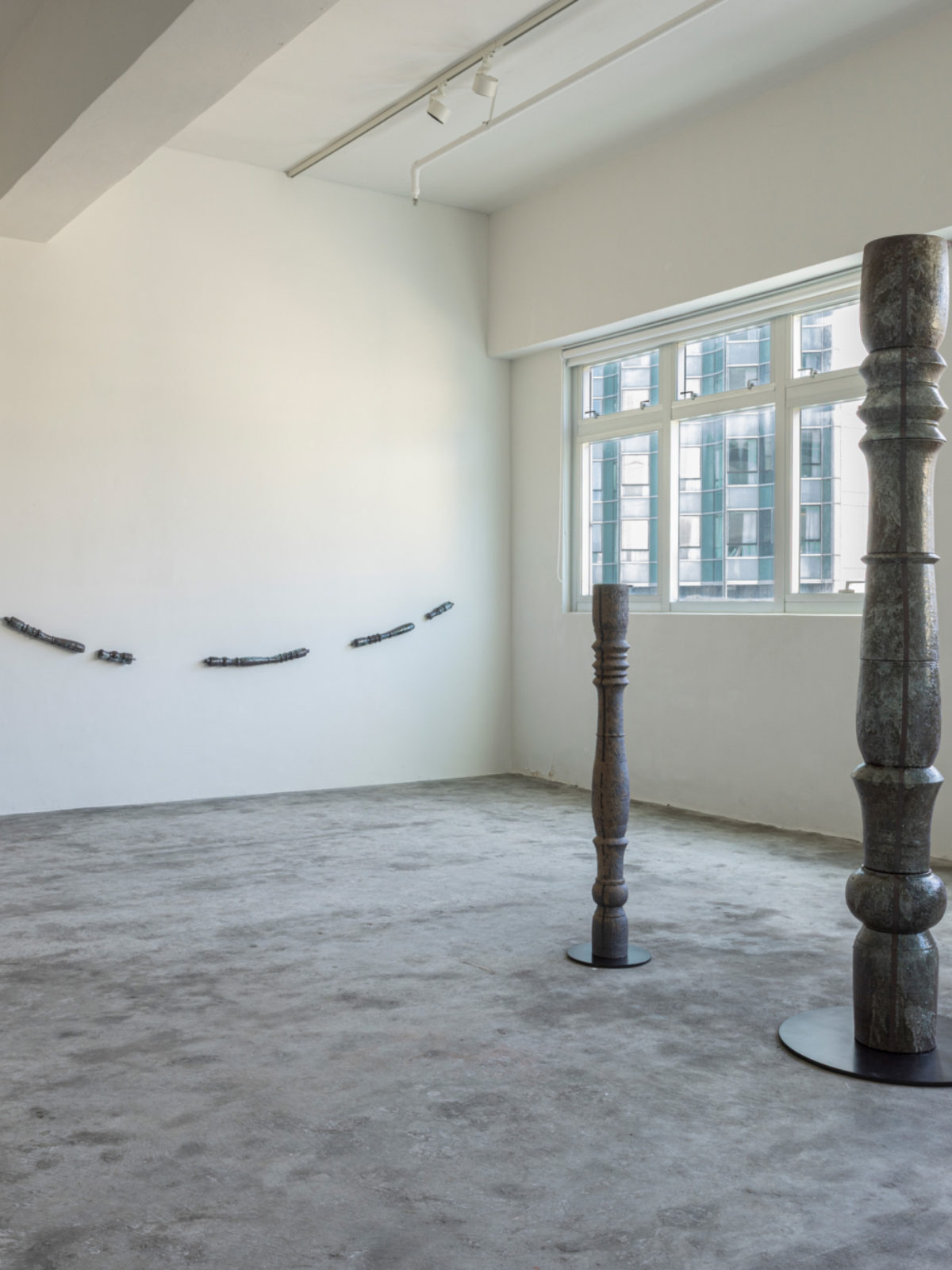
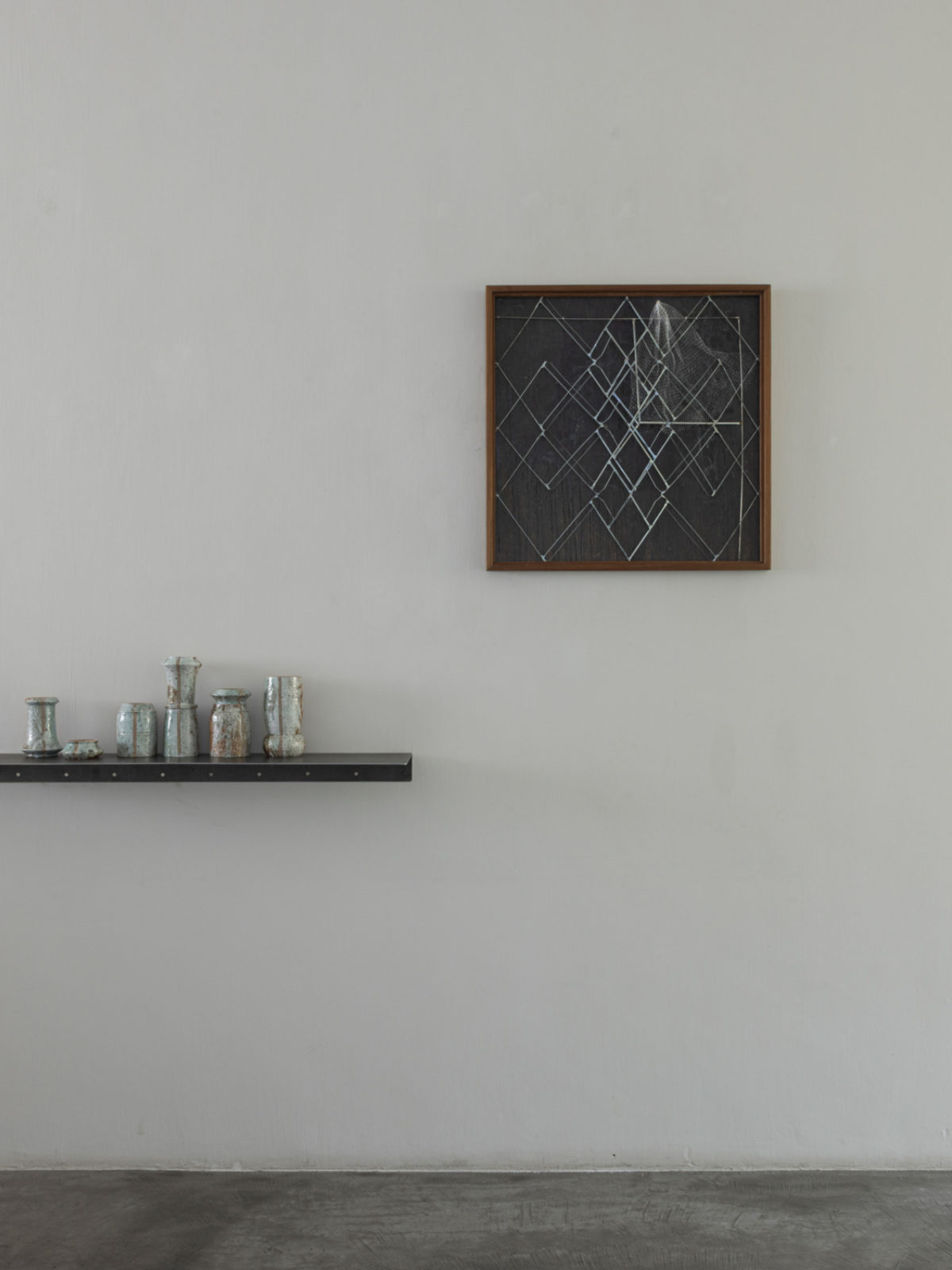
Asteroid J-734 ends with the Windbreak series, which began in 2024 during Lam’s year-long residency in Longquan, China, a region famous for its unique celadon. On a visit to Shanghai, Lam encountered historical Western villas in its Pudong district. Amidst these unfamiliar environments, the sight of balusters surfaced the artist’s memories of her childhood home. How is it that one can find such meaning in an object, let alone a sense of familiarity in a foreign place? The relationship between material forms to individual and collective memory intrigued Lam, leading her to develop the series of ceramic balusters.
A new beginning in many ways, the residency marked the artist’s first-time learning to work with clay and glaze. The miniature Windbreak sculptures in the exhibition emerged from this period of experimentation, as she explored these unfamiliar materials and techniques. Stripped of the balusters’ original functionality, Lam’s works become forms of new meaning. Each varying in their size, colour and form, they stand as tangible traces of the artist’s journey – an embodiment of memory, discovery, and renewal. Given the title Windbreak, which describes a method of planting trees in a linear formation to slow wind, reduce radiant heat, and protect the surrounding land, the works become a physical manifestation of resilience – a metaphor for the stability and clarity of identity she has cultivated in her time away from Hong Kong. Within it, a quieter statement of what endures amid change emerges: nature’s lasting ability to protect and to guide.
Coming together to form a forest within Asteroid J‑734, Windbreak anchors its roots in Hong Kong—where Jaffa Lam also finds herself returning home. This gesture of homecoming culminates in Endless Column, 2025–2026, a hybrid sculpture uniting Longquan clay and celadon glaze with wooden balusters found in Longquan and Hong Kong. Through combining these materials, Lam creates a structure that bridges the organic and the domestic – a gesture of returning discovery to the space of home. Standing as a central pillar within the exhibition, the work functions both as structure and symbol: a marker of domestic space and a reflection of Lam’s idea of the “domestic self.” For her, it stands as both foundation and horizon—an enduring testament to an authentic self forged through making, place, and memory.